| After the Fair |
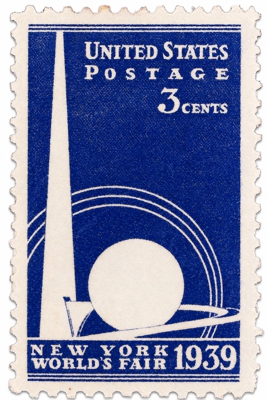
The Fair Closes The New York World's Fair closed for the final time on October 27, 1940. The Trylon and Perisphere disappeared. Pavilions were dismantled. Exhibits were removed or disbursed. The spectacular temporary city that had risen from Flushing Meadows was gradually erased. But the Fair's influence did not disappear with its buildings. Its ideas about highways, suburban development, consumer technology, communications, automation and modern design became increasingly familiar after World War II. Many things that had appeared fantastic in 1939 became ordinary features of American life. Television entered millions of homes. Superhighways crossed the continent. Commercial aviation expanded dramatically. Plastics and synthetic materials became commonplace. Automation transformed industry. The World of Tomorrow slowly became the world of everyday life.
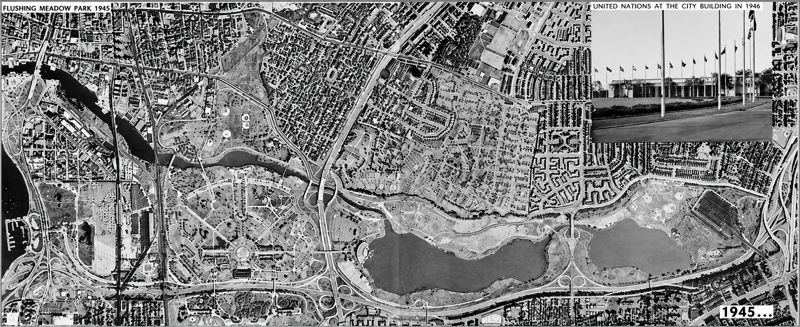
Flushing Meadows Waits After the Fair the grounds entered another chapter. Robert Moses continued the effort to transform Flushing Meadows into a major municipal park. Some remnants of the exposition survived, while most disappeared. But the enormous site remained. And eventually another generation began looking at Flushing Meadows and imagining something extraordinary there. In the early 1960s, the World's Fair returned.
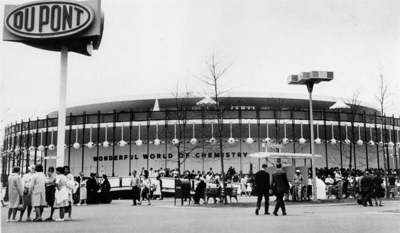
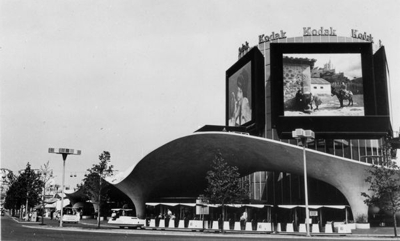
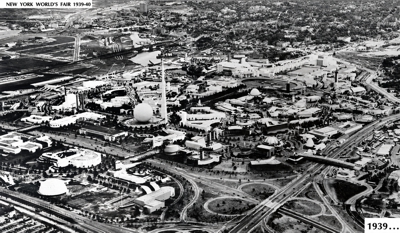
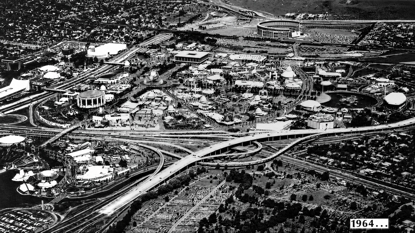
From the Trylon and Perisphere to the Unisphere The similarities between the two New York Fairs are remarkable. Both occupied Flushing Meadows. Both transformed the landscape. Both relied heavily upon American corporations to present visions of technological progress. Both surrounded those visions with international exhibits, restaurants, entertainment and spectacular architecture. In 1939 it was the Trylon and Perisphere. In 1964 it was the Unisphere. There was even another Futurama. At the 1964-1965 Fair, General Motors returned with Futurama II, carrying millions of visitors through visions of cities, deserts, oceans, jungles, polar regions and even the surface of the moon. Westinghouse returned as well and buried another time capsule beside the one it had placed underground in 1940. The connections were everywhere. Yet the two Fairs viewed the future from very different moments in American history. The 1939 Fair imagined a future that had not yet experienced World War II. The 1964 Fair imagined the future from the middle of the Space Age. One dreamed of superhighways, planned cities and household technology. The other dreamed of computers, atomic energy, satellites and journeys into space.
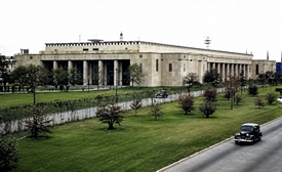
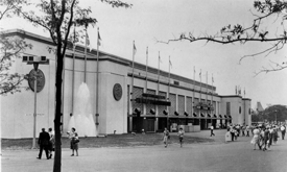
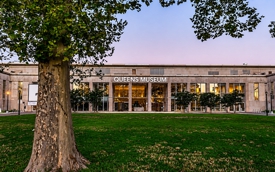
Two Fairs - One Remarkable Place Today, walking through Flushing Meadows-Corona Park, it is easy to think first of the 1964-1965 World's Fair. The Unisphere still dominates the landscape. The New York State Pavilion towers remain nearby. Other structures and landscape features continue to remind visitors of the Space Age exposition. The 1939 Fair is harder to see. Its great white Trylon is gone. The Perisphere is gone. Futurama disappeared. Democracity disappeared. The colorful pavilions and glowing fountains vanished generations ago. Only the Fair's New York City building remains as the Queens Museum in Flushing Meadows Park. But the earlier Fair is still a part of the landscape story.
Without the transformation undertaken for the 1939 World's Fair, the Flushing Meadows that welcomed another exposition in 1964 would never have existed in quite the same way. The two Fairs therefore cannot be completely separated. They are chapters of the same story. The World of Tomorrow Perhaps the most fascinating thing about the 1939 World's Fair is looking back at what people once believed the future would be. Some predictions were wildly optimistic. Others missed the mark entirely. But many were surprisingly perceptive. Americans did build enormous highway systems. Cities spread outward into suburbs. Television transformed entertainment and communication. Air travel became routine. Automation became part of everyday life. Technology entered the American home on a scale few people in 1939 could have imagined. And twenty-five years later, millions of people returned to the same patch of Queens to ask the same irresistible question: What Comes Next? That may be the greatest connection between the New York World's Fairs of 1939-1940 and 1964-1965. Neither Fair was really about predicting the future correctly. They were about the excitement of imagining it. For two remarkable moments in the twentieth century, Flushing Meadows became a place where millions of people could walk through the gates, leave the ordinary world behind, and spend a day in tomorrow.
|
 |