| The World of Tomorrow |
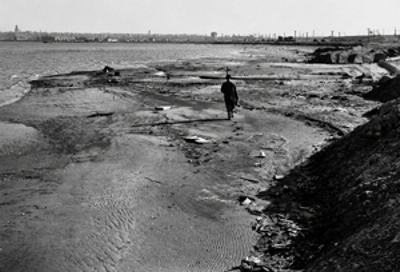
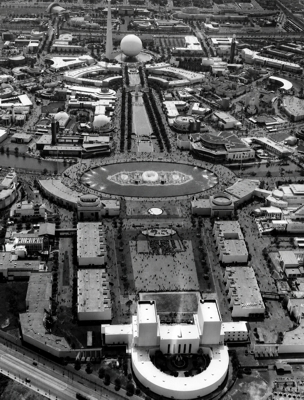
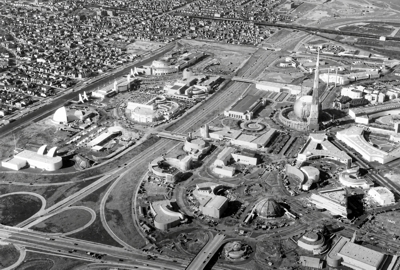
Building the World of Tomorrow Long before the Unisphere rose above Flushing Meadows, before visitors rode through Futurama II, watched it's a small world, or stood in line to see Michelangelo's Pieta, another extraordinary World's Fair occupied these same grounds. It was the New York World's Fair of 1939 and 1940 - a spectacular vision of a future that seemed almost limitless. Its theme was "Building the World of Tomorrow." And for millions of people who passed through its gates, tomorrow seemed to have arrived. The setting could hardly have been less promising. Flushing Meadows was once a marshy expanse that had become notorious as a dumping ground for ashes and refuse. Yet planners saw possibilities in this enormous tract of land in Queens. Beginning in 1936, the landscape was dramatically transformed in preparation for the Fair. The huge task of transformation was headed by Parks Commissioner and master planner Robert Moses. Roads were constructed. Transit facilities were improved. Lagoons, fountains, gardens and broad pedestrian malls appeared. Where mountains of ash had once dominated the landscape, an entirely new city seemed to rise.
The transformation served two purposes. It provided New York with the enormous site required for a World's Fair while helping create the foundation for a permanent public park after the exposition. It was a pattern that would be repeated when the Fair returned to Flushing Meadows a quarter century later. April 30, 1939 The New York World's Fair officially opened on April 30, 1939, exactly 150 years after George Washington had taken the oath of office as the first president of the United States in New York City. President Franklin D. Roosevelt participated in the opening ceremonies, which were televised experimentally - an appropriate technological flourish for an exposition devoted to the future. Visitors entering the grounds discovered something far more ambitious than a collection of exhibition buildings. The Fair attempted to show them an entirely new way of living.
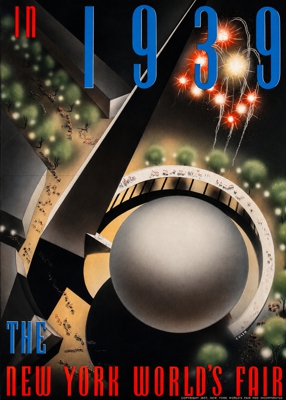
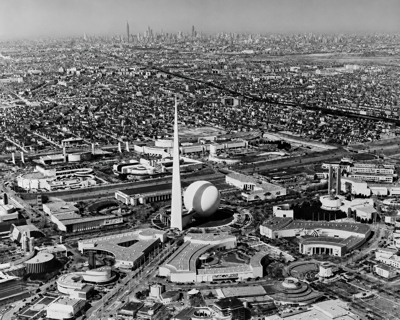
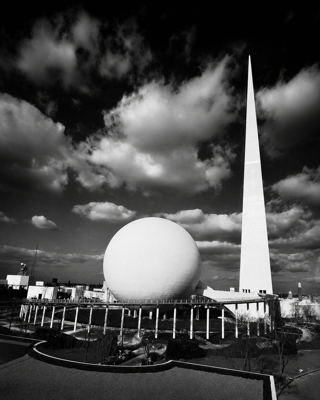
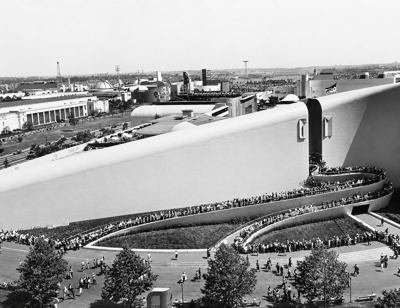
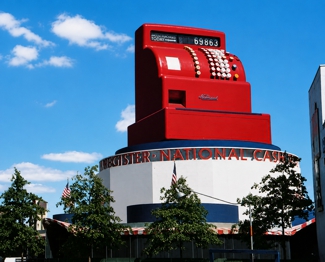
Nearly 60 nations participated, along with 33 states and U.S. territories and more than a thousand exhibitors. Some of America's largest corporations built elaborate displays intended not merely to advertise their products, but to demonstrate how technology might transform everyday life During its two seasons, approximately 45 million people would visit the Fair. The Trylon and Perisphere Nothing represented the Fair more dramatically than the two enormous white structures rising from its Theme Center. The Trylon and Perisphere became the unmistakable symbols of the exposition. The Trylon was a soaring, three-sided spire. Beside it stood the immense spherical Perisphere. Together they created one of the most distinctive architectural images ever associated with a World's Fair.
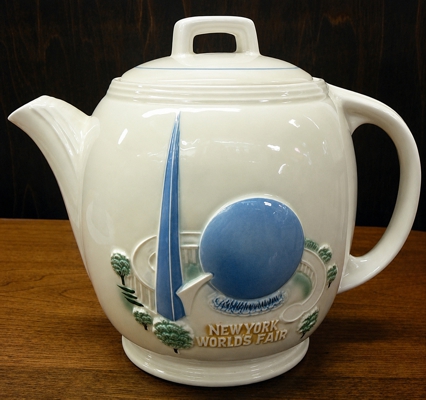
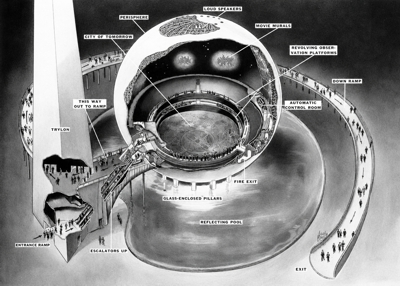
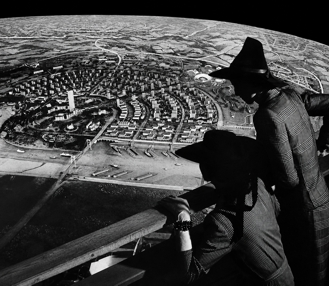
They appeared everywhere - on guidebooks, postcards, advertisements, souvenirs, posters, tickets and promotional material. To Americans in 1939, their futuristic forms immediately meant one thing: The World of Tomorrow Visitors approached the Perisphere by an enormous escalator and entered an attraction called Democracity. Inside the Perisphere was a miniature city of the future created under the direction of industrial designer Henry Dreyfuss. Visitors stood on moving platforms and looked down upon an enormous model representing an ideal American community of the year 2039. At its center was Centerton, surrounded by residential communities, industrial districts, green spaces and transportation networks. Everything was carefully planned. Homes were separated from heavy industry. High-speed highways connected communities. Green belts and open countryside surrounded population centers. Transportation and urban development worked together rather than competing with one another. Lighting, narration and music transformed the model into a theatrical presentation. Democracity wasn't simply predicting new gadgets. It was proposing an entirely new way to organize American life.
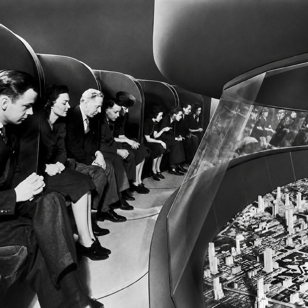
If Democracity showed visitors and idealized city of the distant future, General Motors offered something that seemed tantalizingly closer. Its attraction was called Futurama. Designed by Norman Bel Geddes, Futurama became one of the sensations of the Fair. Visitors sat in chairs that carried them above an immense model landscape depicting America as General Motors imagined it might appear in 1960. Below were modern cities, farms, mountains and vast networks of multi-lane highways. Traffic flowed smoothly, intersections had been engineered for efficiency. Cars traveled rapidly between carefully planned cities. Congestion seemed to have disappeared. At the conclusion, visitors emerged into a full-sized representation of the futuristic world they had just viewed. They were even given a button proclaiming: "I Have Seen the Future." Much of Futurama's vision proved remarkably prophetic. The interstate highway system, suburban expansion and automobile-oriented development that reshaped America after World War II bore striking similarities to the world visitors had seen from their moving chairs in 1939.
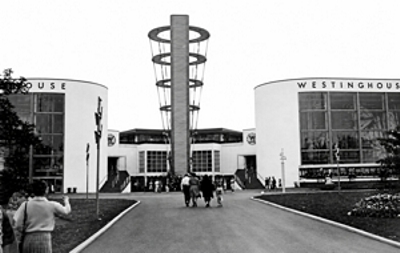
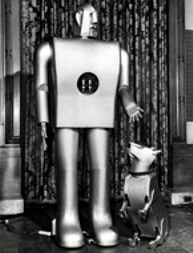
Technology Takes Center Stage Throughout the Fair, American corporations demonstrated inventions that promised to change daily life. Visitors encountered early television, new synthetic materials, improved household appliances, communications technology and automated machinery. At Westinghouse, one of the Fair's great celebrities wasn't human at all. His name was Elektro. The seven-foot mechanical man could walk, talk, count on his fingers and respond to spoken commands. Elektro even appeared to smoke cigarettes - a demonstration that seemed amusing rather than alarming to audiences of 1939. He was accompanied by his mechanical dog, Sparko. To Fair visitors, Elektro seemed to offer a glimpse of a coming age of robots and automation.
Westinghouse also buried a Time Capsule intended to remain underground for 5,000 years. Filled with objects and information representing contemporary civilization, it was designed to communicate the world of 1939 to people living thousands of years in the future.Twenty-five years later, Westinghouse would bury a second time capsule nearby during the 1964-1965 World's Fair. A World of Color Although most surviving photographs are black and white, the 1939 Fair was anything but. Color was an essential part of its design. Buildings were painted in striking combinations of orange, blue, red, yellow, green and white. Murals, sculptures, fountains, banners and landscaping contributed to an environment unlike an ordinary city. Architecture itself became part of the entertainment. Buildings didn't necessarily have to look permanent because most of them weren't intended to survive the Fair. Architects therefore experimented with unusual shapes, enormous signs, sweeping curves and dramatic towers.
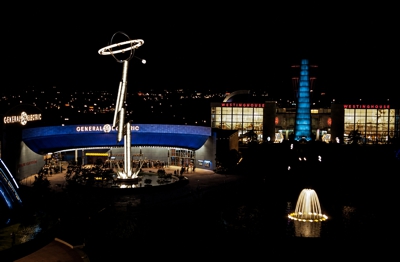
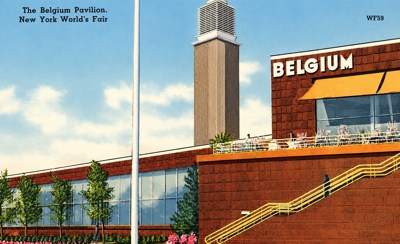
At night the transformation became even greater. Floodlights illuminated buildings in changing colors. Fountains glowed. Searchlights swept through the sky. The World of Tomorrow became a world of light. Nations of the World The Fair was also an enormous international exposition. Foreign governments constructed pavilions displaying their cultures, industries, art and national achievements. Visitors could walk from one country to another in a matter of minutes. The international area provided Americans - many of them whom would never travel overseas - with an opportunity to experience architecture, food, art, music and traditions from around the globe.
But there was an unavoidable irony. The Fair celebrated international cooperation at precisely the moment when international cooperation was collapsing. Across the Atlantic, Europe was moving toward war. The Amusement Area
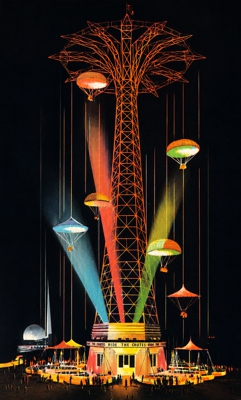
Not everything at the Fair was educational or futuristic. There was also an enormous amusement section. Here the atmosphere became louder, brighter and considerably less serious. Visitors encountered rides, restaurants, theatrical productions, sideshows and spectacles. One of its greatest attractions was Billy Rose's Aquacade, an enormous water spectacular featuring swimmers, divers, music, elaborate choreography and theatrical effects. Among its stars were Eleanor Holm and Johnny Weissmuller, already famous for portraying Tarzan on the motion-picture screen. Crowds packed the grandstands to watch hundreds of performers turn swimming into theatrical entertainment. The Amusement Area reminded everyone that, however lofty its theme, a World's Fair still had to be fun. Food at the Fair Food was another attraction. Restaurants and concessions offered everything from familiar American fare to dishes representing participating nations. For many visitors, sampling unfamiliar foods was part of the adventure. A family could spend the morning imagining life in a futuristic city, have lunch in another country, watch a robot in the afternoon and finish the evening beneath illuminated fountains. That mixture of education, entertainment, fantasy and commerce was the essence of the World's Fair experience.
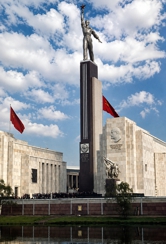
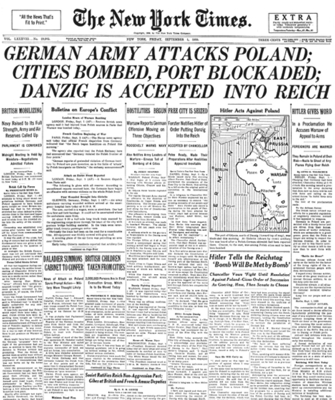
Tomorrow Meets Reality Then the world changed. On September 1, 1939, Germany invaded Poland. Britain and France declared war on Germany two days later. World War II had begun. Suddenly an exposition celebrating international cooperation and an optimistic technological future existed alongside news of invasion, destruction and conflict overseas. The contrast was impossible to ignore. 'The first season closed in October. The Fair would return the following year - but the world surrounding it would be very different. When the gates reopened on May 11, 1940, the exposition had been revised. The emphasis shifted toward a more accessible and entertainment-oriented Fair, and the admission price was reduced. The international situation had also dramatically altered participation. Several countries did not return. The Soviet Union dismantled its enormous pavilion, leaving a conspicuous open space that became the American Common, where patriotic events and performances were presented. During the 1940 season, German forces swept through Western Europe. Visitors could walk through pavilions representing nations that were simultaneously fighting for their survival thousands of miles away. The optimistic World of Tomorrow was being overtaken by history. |
||||||||||||||||||||
  |